
 EN
EN
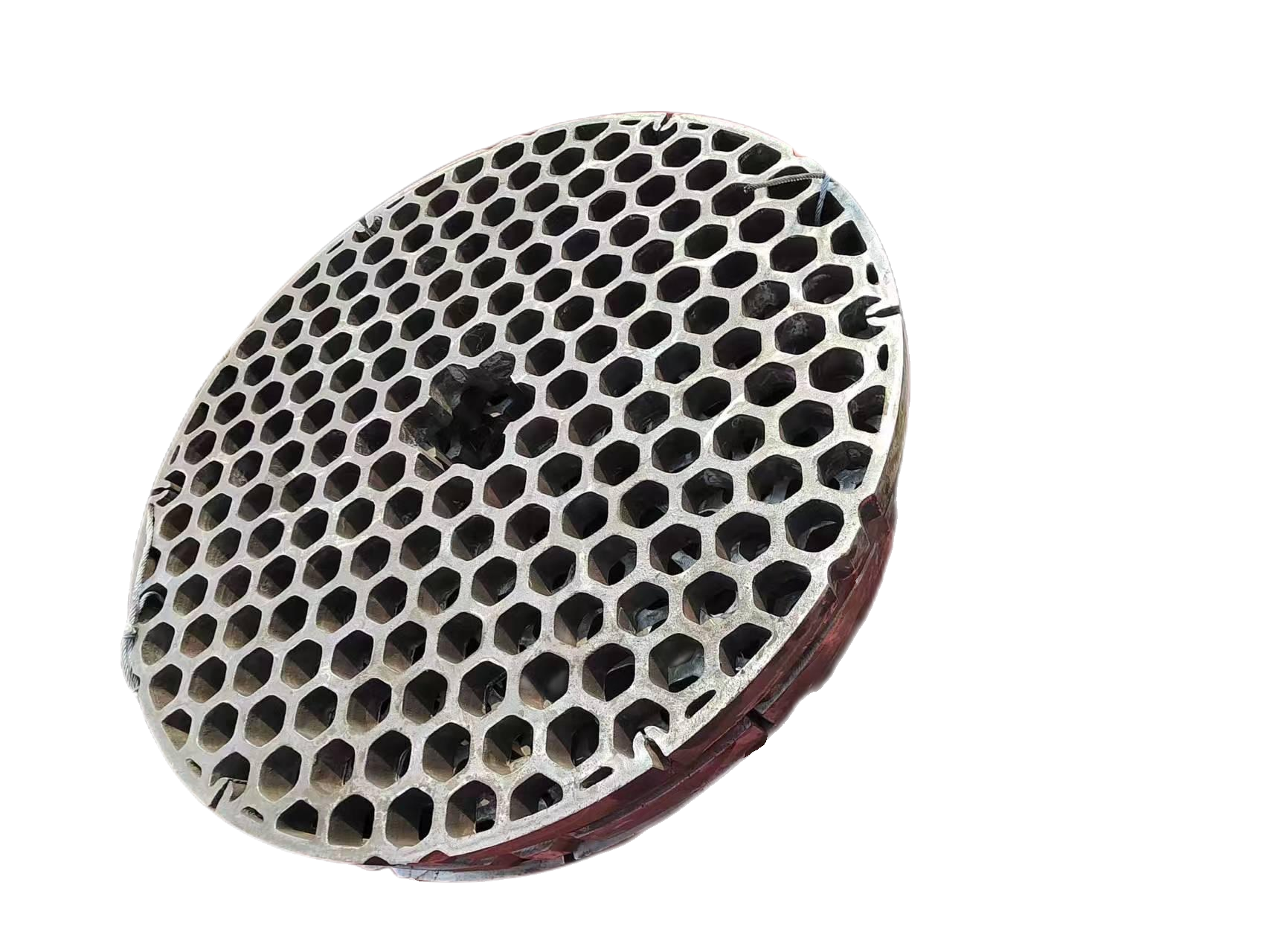
Steel components used in industrial applications face constant challenges from friction, abrasion, and contact stress, all of which gradually degrade material integrity and reduce service life. Choosing the right method to enhance wear resistance directly impacts equipment reliability, maintenance frequency, and total cost of ownership. Two primary approaches dominate this field: comprehensive heat treatment processes that modify the entire material structure, and surface hardening techniques that create a protective outer layer while preserving a ductile core. Understanding which process delivers superior wear resistance for specific steel parts requires examining not only hardness levels but also the underlying metallurgical transformations, operational conditions, and component geometry that influence real-world performance.
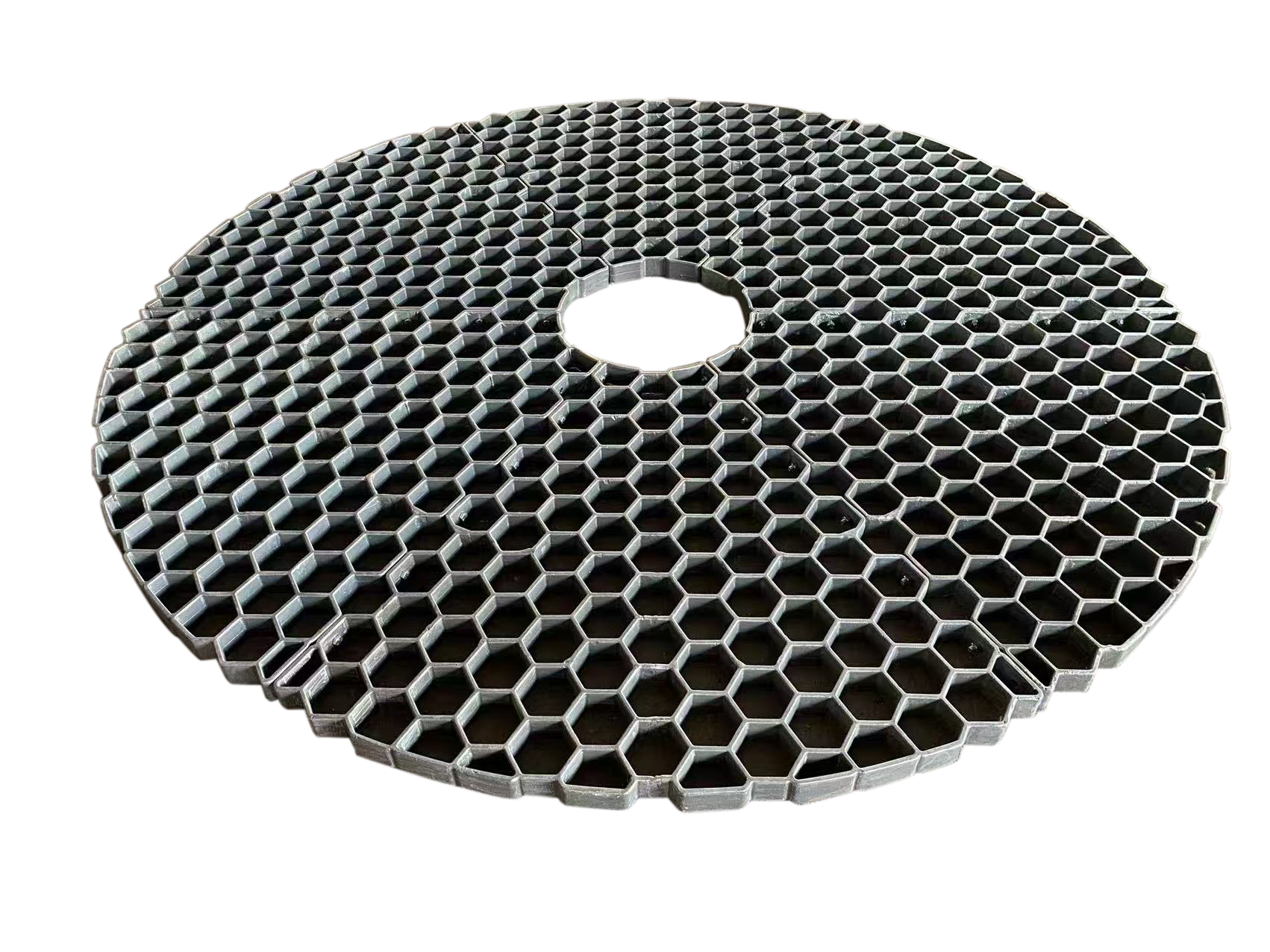
The decision between heat treatment and surface hardening fundamentally depends on whether wear occurs uniformly across the component or concentrates at specific contact zones. Full-depth heat treatment transforms the entire cross-section, achieving uniform mechanical properties throughout the material, which proves advantageous for parts experiencing distributed loads or requiring consistent hardness from surface to core. Surface hardening methods, by contrast, create a hardness gradient with maximum values at the exterior while maintaining toughness internally, making them ideal for components subjected to localized contact stress, impact loading, or bending forces where a brittle through-hardened structure would risk catastrophic failure. This article analyzes both approaches through the lens of wear resistance improvement, examining selection criteria based on material composition, service environment, dimensional constraints, and economic considerations that manufacturing engineers and design teams must evaluate.
Understanding Heat Treatment Processes and Their Impact on Wear Resistance
Fundamental Mechanisms of Through-Hardening Heat Treatment
Heat treatment refers to controlled thermal cycles that alter the microstructure of steel through phase transformations, primarily involving austenitization followed by quenching and tempering. During austenitization, steel is heated above its critical temperature, typically between 800°C and 950°C depending on carbon content, causing the crystal structure to transform from ferrite-pearlite into austenite where carbon dissolves uniformly. Rapid cooling through quenching freezes this carbon-rich austenite into martensite, a supersaturated body-centered tetragonal structure that provides maximum hardness but extreme brittleness. Subsequent tempering at temperatures between 150°C and 650°C relieves internal stresses and precipitates fine carbides, trading some peak hardness for improved toughness and dimensional stability while maintaining wear resistance suitable for industrial applications.
The effectiveness of heat treatment in improving wear resistance correlates directly with achieved hardness levels, which depend on steel carbon content and alloying elements. Medium-carbon steels containing 0.40-0.60% carbon can reach 55-62 HRC after proper heat treatment, delivering excellent resistance to abrasive and adhesive wear mechanisms. High-carbon tool steels with 0.80-1.50% carbon achieve even higher hardness values of 62-66 HRC, making them suitable for cutting tools and dies where extreme surface durability is paramount. However, through-hardening imposes significant dimensional changes due to phase transformation volume differences, requiring careful control of quenching media, temperature gradients, and component geometry to minimize distortion that complicates subsequent machining operations.
Wear Resistance Characteristics After Full-Depth Heat Treatment
Components subjected to comprehensive heat treatment exhibit uniform hardness from surface to core, providing consistent wear resistance regardless of material removal during service. This characteristic proves particularly valuable for parts experiencing gradual wear across their entire working surface, such as wear plates, crushing equipment liners, and conveyor components handling abrasive materials. The through-hardened condition ensures that as the surface wears away, the underlying material maintains equivalent hardness, preventing accelerated degradation that would occur if a hardened case wore through to reveal softer substrate material beneath.
The martensitic microstructure created through heat treatment resists plastic deformation and material displacement under contact stress, effectively combating adhesive wear where material transfer occurs between sliding surfaces. Fine carbide precipitates distributed throughout the tempered martensite matrix provide additional resistance to abrasive wear by acting as hard obstacles that deflect or fracture abrasive particles. This combination makes heat treatment particularly effective against two-body abrasion, where hard particles trapped between surfaces cause cutting and plowing damage, and three-body abrasion involving loose abrasive media that impacts and slides across component surfaces.
Limitations and Constraints of Through-Hardening for Complex Geometries
Despite its wear resistance benefits, full-depth heat treatment presents significant challenges for components with complex shapes, thin sections, or tight tolerances. The severe quenching required to achieve deep hardening creates thermal gradients that generate internal stresses, often resulting in warping, cracking, or dimensional changes exceeding acceptable limits. Parts with sharp corners, keyways, or abrupt section changes concentrate these stresses, increasing failure risk during the quenching phase. Subsequent straightening or machining operations add cost and may introduce residual stresses that compromise fatigue resistance and long-term durability.
The through-hardened condition also sacrifices core toughness, making components brittle and susceptible to sudden fracture under impact loading or shock conditions. This brittleness limits heat treatment applicability for components experiencing combined loading modes where surface wear resistance must coexist with impact absorption capability. Gears, shafts, and linkages subjected to cyclical bending stresses while experiencing surface contact wear represent examples where through-hardening may provide inadequate fracture resistance despite superior surface hardness. Additionally, heat treatment effectiveness depends heavily on hardenability, a steel property determined by alloy composition that dictates how deeply hardening extends into thick sections during quenching, limiting its use in large components without expensive alloy upgrades.
Surface Hardening Methods and Their Advantages for Localized Wear Protection
Carburizing and Carbonitriding for Case-Hardened Layers
Surface hardening encompasses multiple technologies that create a hard outer case while preserving a ductile core, with carburizing representing the most widely used thermochemical diffusion process. During carburizing, low-carbon steel components are exposed to a carbon-rich atmosphere at temperatures between 880°C and 950°C, allowing carbon atoms to diffuse into the surface layers and increase local carbon content to 0.80-1.20%. Subsequent quenching transforms this carbon-enriched case into hard martensite, typically achieving 58-64 HRC surface hardness, while the low-carbon core remains tough and resilient. Case depths ranging from 0.5mm to 2.5mm can be precisely controlled through processing time and temperature, enabling engineers to optimize the hardness-toughness balance for specific applications.
Carbonitriding introduces both carbon and nitrogen into the surface, operating at slightly lower temperatures around 840°C-870°C and producing shallower cases typically between 0.1mm and 0.75mm deep. The nitrogen addition enhances hardenability in the case layer, allowing slower quench rates that reduce distortion risk while still achieving high surface hardness values. This process particularly suits components requiring wear resistance with minimal dimensional change, such as small gears, fasteners, and precision instruments where post-heat-treatment machining must be avoided. The combination of hard case and tough core makes carburized and carbonitrided parts exceptionally resistant to contact fatigue, rolling contact wear, and surface-initiated cracking that commonly occur in power transmission components.
Induction and Flame Hardening for Selective Area Treatment
Induction hardening uses electromagnetic fields to rapidly heat specific areas of medium-carbon steel components to austenitizing temperature, followed by immediate quenching to create localized martensitic transformation. This process allows selective hardening of wear-critical zones such as bearing surfaces, cam lobes, or gear teeth while leaving other areas unhardened to maintain machinability or preserve core toughness. Heating occurs within seconds to minutes depending on case depth requirements, making induction hardening highly productive for medium to high-volume manufacturing. Case depths typically range from 1.5mm to 6mm, with surface hardness reaching 50-60 HRC depending on base material carbon content.
Flame hardening achieves similar results using oxy-fuel torches to heat component surfaces, offering greater flexibility for large parts, irregular shapes, or low-volume production where dedicated induction coil tooling is economically impractical. Both methods preserve the original material microstructure in non-heated areas, avoiding the distortion and dimensional changes associated with full furnace heating cycles. This characteristic proves particularly valuable for large shafts, crane wheels, and excavator track links where only specific wear surfaces require hardening while the bulk material must retain its original properties to support structural loads. The rapid heating and localized transformation minimize overall energy consumption and reduce processing time compared to conventional furnace-based heat treatment approaches.
Nitriding for Enhanced Surface Properties Without Dimensional Change
Nitriding distinguishes itself from other surface hardening methods by forming hard nitride compounds through diffusion at relatively low temperatures between 480°C and 580°C, well below the austenitic transformation range. This sub-critical processing eliminates phase transformations and associated volume changes, producing negligible distortion even in complex geometries with tight tolerances. The process creates an extremely hard compound layer at the surface, typically 0.01-0.02mm thick with hardness exceeding 800 HV, supported by a diffusion zone extending 0.1-0.7mm deep where dissolved nitrogen solid-solution strengthens the matrix. This dual-layer structure provides exceptional wear resistance combined with improved fatigue strength and corrosion resistance.
Nitriding requires alloy steels containing chromium, molybdenum, aluminum, or vanadium, which form stable nitrides that anchor the hardened layer. The process duration extends from 20 to 80 hours depending on desired case depth, making it slower than carburizing or induction hardening but justified for precision components where dimensional stability is critical. Nitrided surfaces resist adhesive wear, galling, and scuffing exceptionally well, making the process ideal for hydraulic piston rods, injection molding screws, extrusion dies, and firearm components where friction reduction and wear resistance must coexist with exact dimensional control. The low processing temperature also allows nitriding after final machining and grinding operations, eliminating costly post-hardening finishing steps.
Comparative Analysis of Wear Resistance Performance Under Different Service Conditions
Abrasive Wear Environments and Process Selection
When components encounter abrasive particles in mining, agricultural, or material handling applications, wear resistance depends primarily on surface hardness and the hardness differential between the steel and abrasive media. Full-depth heat treatment delivers superior performance when abrasion affects broad areas or when wear depth may exceed typical case-hardened layer thickness. Components like crusher jaws, tillage points, and bucket teeth benefit from through-hardening that maintains hardness as material progressively wears away. The uniform hardness ensures consistent wear rates and predictable service life without the sudden performance degradation that occurs when a shallow hardened case wears through.
Surface hardening proves more appropriate when abrasive wear concentrates at specific contact zones while other areas experience minimal degradation. Conveyor rollers, chute liners, and guide rails exemplify applications where localized wear occurs at predictable locations, making case hardening economically attractive by applying protective layers only where needed. The tough core beneath the hardened case absorbs impact energy from falling materials or sudden loading, preventing brittle fracture that would occur with through-hardened designs. For severe abrasion involving hard minerals or recycled materials, combining heat treatment of high-carbon alloy steel with surface hardening techniques can achieve optimal results, though at increased material and processing costs.
Contact Fatigue and Rolling Wear Applications
Rolling element bearings, gears, and cam followers experience Hertzian contact stresses that generate subsurface shear stresses capable of initiating fatigue cracks. Surface hardening methods, particularly carburizing, create an optimal stress distribution profile for these applications by positioning maximum compressive residual stresses just below the surface where subsurface shear stress peaks. The hardness gradient transitions from 58-64 HRC at the surface to 30-40 HRC in the core, providing excellent resistance to surface-initiated pitting and spalling while maintaining sufficient core strength to support contact loads without plastic deformation.
Through heat treatment produces uniform hardness that resists surface contact stress but lacks the beneficial compressive residual stress distribution that case hardening generates. The through-hardened condition also exhibits lower resistance to subsurface fatigue crack propagation because the entire cross-section maintains high hardness and reduced fracture toughness. Comparative testing demonstrates that properly carburized gears and bearings typically achieve 2-4 times longer fatigue life than through-hardened equivalents under rolling contact conditions. This performance advantage stems from the case-core architecture that arrests crack propagation at the hardness transition zone, preventing small surface defects from developing into catastrophic failures.
Impact and Shock Loading Considerations
Components subjected to repetitive impact, such as hammer mill hammers, rock drill bits, and railway track components, require exceptional toughness to absorb shock energy without fracturing. Surface hardening methodologies excel in these demanding environments by combining a wear-resistant surface with a ductile core capable of plastic deformation that dissipates impact energy. The case-core structure allows localized yielding in the core while the hard case maintains geometric integrity and resists material displacement, producing superior impact fatigue resistance compared to brittle through-hardened structures.
Through heat treatment applied to high-carbon steels creates components prone to sudden brittle failure under impact loading despite excellent wear resistance during steady-state operation. The martensitic microstructure throughout the cross-section provides minimal plastic deformation capacity before fracture, accumulating damage through micro-cracking that eventually coalesces into catastrophic failure. Tempered martensite improves toughness but requires sacrificing hardness and wear resistance, creating a fundamental compromise that heat treatment alone cannot optimally resolve. Applications requiring both extreme surface hardness and impact resistance typically necessitate surface hardening of medium-carbon alloy steels or dual heat treatment sequences combining initial through-hardening followed by surface re-hardening.
Technical and Economic Factors Influencing Process Selection
Material Composition Requirements and Cost Implications
Heat treatment effectiveness depends fundamentally on base material carbon content and alloying elements, with medium-carbon grades containing 0.40-0.60% carbon representing the optimal composition range for achieving practical hardness levels while maintaining reasonable toughness after tempering. Low-carbon steels with less than 0.25% carbon prove unsuitable for through-hardening because insufficient carbon limits maximum achievable hardness to unacceptable levels below 40 HRC. Conversely, high-carbon tool steels exceeding 0.80% carbon deliver exceptional hardness but require careful heat treatment control to avoid excessive brittleness and cracking susceptibility.
Surface hardening processes offer greater material flexibility, with carburizing specifically designed for low-carbon steels containing 0.10-0.25% carbon that cannot achieve adequate hardness through conventional heat treatment. This capability enables component design using economical plain carbon grades rather than expensive alloy steels, significantly reducing material costs for large parts or high-volume production. Induction and flame hardening require medium-carbon steels similar to through-hardening but process only specific zones, reducing total energy consumption and cycle time. Nitriding demands alloy steel grades containing nitride-forming elements, increasing material costs but justified by superior dimensional stability and the elimination of post-hardening machining operations.
Component Size, Geometry, and Distortion Control
Large components with thick cross-sections present challenges for through-hardening because quenching severity must increase proportionally with size to achieve adequate cooling rates for martensitic transformation. Heavy sections may require oil quenching, polymer quenchants, or even water quenching for maximum hardenability, substantially increasing distortion risk and internal stress generation. Surface hardening methods circumvent this limitation by treating only the outer layers, allowing thicker components to be effectively hardened with minimal distortion since the bulk material never undergoes phase transformation.
Complex geometries featuring thin sections adjacent to heavy sections experience differential heating and cooling rates during heat treatment that generate stress concentrations and warping. Keyways, splines, and drilled holes act as stress risers where quench cracks frequently initiate during the rapid cooling phase. Surface hardening techniques minimize these risks by using slower heating rates, lower processing temperatures, or localized heating that avoids thermal shock to the entire component. Induction hardening can selectively treat only the areas requiring wear resistance while leaving stress concentration features unhardened and tough. This selective treatment capability often proves decisive for components where post-hardening straightening or re-machining is prohibited by dimensional tolerances or feature accessibility constraints.
Production Volume and Processing Economics
Heat treatment represents a relatively simple and economical process for medium to high production volumes because multiple components can be furnace-loaded simultaneously, sharing energy costs and processing time. Batch processing in sealed quench furnaces or continuous conveyor furnaces achieves economies of scale that reduce per-piece costs as volume increases. The equipment investment for basic heat treatment operations remains moderate compared to specialized surface hardening technologies, making through-hardening attractive for general-purpose industrial components without extreme wear requirements.
Surface hardening methods vary significantly in economic efficiency depending on process type and production volume. Carburizing requires extended furnace cycles of 8-24 hours including diffusion time, heating, and cooling, making it economical only for batch processing of numerous small parts or when superior performance justifies the time investment. Induction hardening offers rapid cycle times measured in seconds or minutes, ideal for high-volume automotive and machinery component production where dedicated coil tooling costs are amortized across thousands of parts. Flame hardening provides maximum flexibility for low-volume, large-component scenarios without tooling investment but relies on operator skill and process control that introduces variability. The decision framework must evaluate total processing cost including material grade selection, energy consumption, cycle time, distortion remediation, and service life extension to determine the most cost-effective approach for specific applications.
FAQ
Can surface hardening achieve the same wear resistance as full heat treatment?
Surface hardening typically achieves equal or superior surface hardness compared to through heat treatment, often reaching 58-64 HRC in the case layer versus 52-60 HRC for tempered through-hardened parts. However, wear resistance depends not only on surface hardness but also on case depth, loading conditions, and wear mechanisms involved. For applications where wear depth remains within the hardened case thickness, surface hardening delivers equivalent or better performance while providing superior impact resistance through the tough core. If wear progresses beyond case depth, performance degrades as softer core material becomes exposed, whereas through-hardened parts maintain consistent properties throughout their service life.
Which process causes less dimensional distortion for precision components?
Nitriding produces the least distortion among all hardening processes because it operates at sub-critical temperatures that avoid austenitic transformation and associated volume changes, typically causing dimensional variations under 0.05mm even for complex geometries. Carburizing generates moderate distortion due to full austenitization and quenching, usually requiring allowances of 0.1-0.3mm for subsequent grinding operations. Through heat treatment creates the most significant dimensional changes and warping risk, particularly for complex shapes or components with varying cross-sections, often necessitating 0.3-0.8mm machining stock and post-hardening straightening operations to achieve final tolerances.
How do I choose between heat treatment and surface hardening for gear applications?
Gear applications overwhelmingly favor surface hardening, specifically carburizing, because gears experience concentrated contact stress at tooth surfaces combined with bending stresses at the root. Carburizing creates the optimal hardness gradient with 58-62 HRC case hardness for wear and pitting resistance while maintaining 30-40 HRC core hardness that provides bending fatigue strength and impact toughness. Through heat treatment would create excessive brittleness at the tooth root where tensile bending stresses concentrate, increasing fracture risk under shock loading. The only exceptions involve very small gears below 25mm diameter or special applications where full-depth hardness is specifically required for unique loading conditions.
Does heat treatment or surface hardening provide better corrosion resistance alongside wear protection?
Neither conventional heat treatment nor most surface hardening processes inherently improve corrosion resistance, as both create martensitic microstructures that remain susceptible to moisture-induced rusting. However, nitriding uniquely enhances corrosion resistance by forming a thin iron nitride compound layer at the surface that acts as a diffusion barrier against corrosive media while simultaneously providing hardness. This dual benefit makes nitriding the preferred choice for components requiring both wear resistance and corrosion protection, such as hydraulic cylinders, pump shafts, and marine equipment. When superior corrosion resistance is essential, stainless steels should be specified with appropriate heat treatment or specialized surface hardening adapted for corrosion-resistant alloys.
Table of Contents
- Understanding Heat Treatment Processes and Their Impact on Wear Resistance
- Surface Hardening Methods and Their Advantages for Localized Wear Protection
- Comparative Analysis of Wear Resistance Performance Under Different Service Conditions
- Technical and Economic Factors Influencing Process Selection
-
FAQ
- Can surface hardening achieve the same wear resistance as full heat treatment?
- Which process causes less dimensional distortion for precision components?
- How do I choose between heat treatment and surface hardening for gear applications?
- Does heat treatment or surface hardening provide better corrosion resistance alongside wear protection?